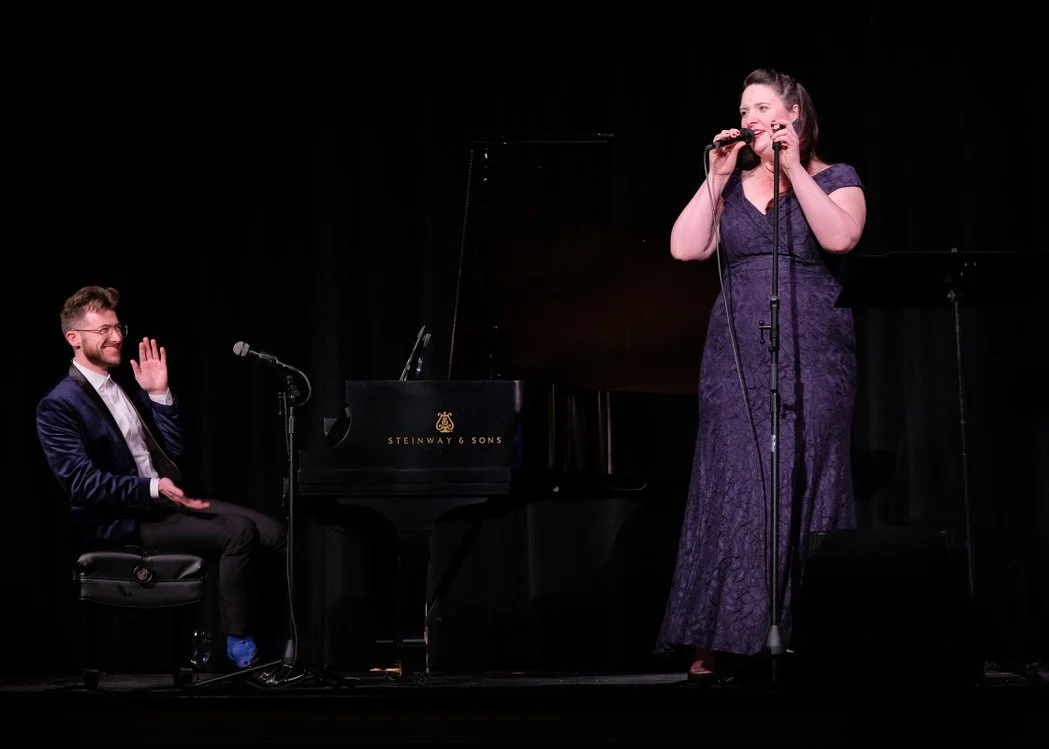
Cabarets are funny little shows without much definition, but seem to be enjoying quite a renaissance as a popular form of entertainment. In Cincinnati every theater organiation, opera company, choir and school music program are putting on cabaret shows these days, whether as fundraisers, pre-performance entertainment, or main show events. Several people have reached out to me over the last few months for my tips on putting together a great cabaret - so, just in case you are putting together your own cabaret performance this year, I thought I'd share some of my top tips to keep in mind when putting together a top-notch cabaret.
In a cabaret, remember that you are playing YOURSELF. Even if you're performing a musical theater tune or a jazzy song that's been recorded by a hundred different people, in this scenario you can present it from your own perspective, not as a character from the show. What do you have to say? Why do YOU connect to this song? How can you put your own spin on it?
You better TALK! An audience wants to get to know you as a person beyond just you as a performer, and they do that by hearing your speaking voice. Personal anecdotes about how you found this song or your favorite performances, background about the creation of the songs and the composer, even telling a corny dad joke to loosen people up- this will all help people connect with you, the person on stage. Then when you start to sing, they'll be on your team and ready to enjoy the ride. (At Queen City Cabaret we make sure everyone who sings on stage also talks at some point during the show.)
Remember - a show with a setlist of songs but no talking is just a concert, not a cabaret.
Think about FLOW. Lay out your setlist on notecards or paper or in a google doc and move songs around until you have exactly the right setlist order. How do you start and end the set strong? How do you get from one song to the next? Envision the energy shifts from song to song from the audience perspective. An audience likes to be surprised but they must feel comfortable with where you're going, or they won't enjoy the ride.
This of course does not mean you can't program two wildly different selections back-to-back - Queen City Cabaret is famously the only group in town to program 'What Can You Get a Nudist for Her Birthday' followed by 'God Rest Ye Merry Gentlemen'. It can work, but you have to make sure the audience knows where they are going, or at least trusts you to take them there.
Variety is KEY. Early twentieth-century French and German cabaret featured not only musical performances but also poetry readings, visual artists, even puppet shows. Bea Arther began her one-woman show with her recipe for leg of lamb, including all the sides. You don't have to stick just to jazz, broadway, or classical music... in fact, a mix of all of the above really makes a show stand out from a recital or jazz concert and shows off a performer's chops. If you have multiple performers, how many combinations of duets and ensemble numbers can you put together between solo numbers? Mix it up, keep it varied, make it fun.
Of course there are so many other considerations for a good cabaret based on resources, location, band size, lighting possibilities, does the audience sit at tables or in theatrical row seating, on and on... maybe if people are interested I'll do a part two to this post!
At the end of the day, I think a great cabaret is simply one where the performers and audience are intimately connected through authentic stories and entertaining performances. Have fun and happy cabareting!